

Table of Contents
- What Is an RPG? The Core Definition
- Core Elements That Define an RPG
- The Main Categories of RPGs
- Subtypes of RPGs: Exploring the Genre’s Diversity
- Blurring the Lines: RPG Elements in Other Genres
- RPGs Yesterday and Today: Evolution of the Genre
- FAQs About RPG Games
Dividing video games into genres helps players know exactly what to expect. From the fast-paced thrills of action games to the self-explanatory nature of racing simulators, some genres are easy to grasp. However, when we ask, “What is an RPG?” the answer becomes a bit more complicated.
RPGs are among the most beloved titles in the industry, with many of gaming’s biggest franchises built on role-playing conventions. They are also incredibly diverse, constantly expanding and exploring new horizons. While defining an RPG can be a challenge, it is far from impossible. From foundational gameplay systems to character growth, here is everything you need to know about this timeless genre.
What Is an RPG? The Core Definition
The most basic answer to “what is an RPG” is that they are Role-Playing Games—a genre where players take control of fictional characters, step into their shoes, navigate through a crafted story, make choices, and watch their characters grow over time.
At first glance, this definition might seem a bit broad, as almost every video game requires you to adopt some type of role. The exact term “RPG” is best seen as a kind of shorthand, representing a specific set of core mechanics and storytelling principles that define the genre.
So, what qualifies as an RPG? The answer lies in the characters and the mechanics. Unlike pure action titles where characters can be more perfunctory, RPGs place a significant emphasis on the protagonist (or a party of characters), their challenges, and their development throughout the narrative. Additionally, they heavily involve character progression systems—think leveling up, gaining stats, and unlocking new abilities.
While these elements can sometimes make RPGs feel like “grinding games,” that’s not a universal rule. What’s more, RPGs aren’t limited by platform: you can find them on retro consoles, browser-based games, modern PCs, and even mobile phones, meaning there is an RPG tailored for every type of gamer.
Core Elements That Define an RPG
To break down what makes an RPG unique, let’s look at its key components—elements that work together to create the immersive experience players love:
-
Character Focus and Storytelling
-
Character Progression
-
Gear and Customization
-
A Rich, Developed World
RPGs center their entire experience around characters. Whether it’s a lone hero on a quest to save the world or a ragtag group of adventurers with conflicting backstories, the characters’ journeys, emotions, and growth are the heart of the game. The story unfolds through main quests and side missions, and in many cases, players’ choices directly impact the world around them, NPC relationships, and even the game’s ending.
Progression is non-negotiable in RPGs. Characters typically start weak—struggling to defeat even low-level enemies like rats, dealing single-digit damage—and grow exponentially over time. By completing quests, defeating foes, and collecting experience points (XP), they level up, gain new stats (such as strength, intelligence, and agility), and unlock skills or talents that shape their playstyle. By the end of the game, a character might be capable of dealing massive damage, standing toe-to-toe with gods or ancient evils.
Gear and luck complement leveling and stats, evolving as characters grow stronger and their stories progress. Weapons, armor, accessories, and magical items not only boost a character’s capabilities but also serve as a tangible reminder of their journey. Each piece might be a reward for a tough boss fight, a treasure found in a hidden dungeon, or a gift from a beloved NPC. An end-game character’s gear is a direct reflection of the battles they’ve fought and the milestones they’ve achieved.
All these elements come together within a fully realized game universe, whether it’s a small-scale mobile title or a blockbuster PC/console game. RPGs embrace characters, stats, storytelling, and gear within a world full of history, lore, and intrigue—think ancient kingdoms, magical realms, post-apocalyptic wastelands, or futuristic galaxies. Exploring this world, uncovering its secrets, and interacting with its inhabitants are key parts of the RPG experience.
The Main Categories of RPGs
RPGs are incredibly diverse, and the genre is often split into two main categories based on cultural origins and design principles: JRPGs and WRPGs.
-
JRPG (Japanese Role-Playing Games)
-
WRPG (Western Role-Playing Games)
JRPGs are defined by their distinct design and storytelling style, deeply rooted in Japanese gaming traditions. They typically feature linear, tightly crafted narratives, turn-based combat systems, vibrant anime-inspired art styles, and fixed protagonist personalities—players step into the shoes of a pre-defined character rather than creating their own from scratch. JRPGs often prioritize emotional storytelling, memorable character arcs, and intricate world-building.
Iconic JRPG series include: Final Fantasy, Dragon Quest, Persona 5, Octopath Traveler, and The Legend of Zelda (often celebrated for its rich action-adventure elements that heavily influenced modern RPGs).
WRPGs, on the other hand, emphasize player freedom and customization. They often feature vast open worlds, deep character creation systems (including customizable appearances, backgrounds, and moral alignments), multiple branching storylines, and a variety of combat systems—from real-time action to tactical turn-based gameplay. WRPGs prioritize player choice, allowing you to shape your character’s morality, relationships, and the ultimate fate of the game world.
Popular WRPGs include: The Elder Scrolls V: Skyrim, The Witcher 3: Wild Hunt, Baldur’s Gate 3, Dragon Age, and Diablo.
Subtypes of RPGs: Exploring the Genre’s Diversity
Beyond JRPGs and WRPGs, the RPG genre has expanded into numerous subtypes, each blending core RPG elements with other gameplay styles:
-
ARPG (Action Role-Playing Games)
-
MMORPG (Massively Multiplayer Online Role-Playing Games)
-
TRPG (Tabletop Role-Playing Games)
-
CRPG (Computer Role-Playing Games)
-
Roguelike RPGs
ARPGs swap turn-based combat for real-time, skill-based fighting, where player reflexes and strategy matter more than menu navigation. They retain core RPG elements like character progression and gear customization but prioritize fast-paced action.
Examples: Genshin Impact, Diablo IV, Elden Ring, and Darksiders.
MMORPGs are online RPGs that allow thousands of players to interact in the same game world simultaneously. Players can team up for raids, complete quests together, join guilds, and compete against each other in PvP battles. These games feature persistent worlds that evolve even when individual players are offline.
Examples: World of Warcraft (WoW), Final Fantasy XIV, and Guild Wars 2.
Before electronic RPGs, there were TRPGs—physical tabletop games played with dice, rulebooks, and imagination. The most famous example is Dungeons & Dragons (D&D), where a Dungeon Master guides players through a custom story, and players roll dice to determine the outcome of their actions. TRPGs are all about social interaction and collaborative storytelling.
CRPGs refer to classic Western RPGs originally designed for computers, often featuring isometric graphics, deep text-based storytelling, and highly complex gameplay mechanics based on tabletop rulesets. They are the spiritual predecessors of modern WRPGs.
Examples: Baldur’s Gate, Pillars of Eternity, and Icewind Dale.
Roguelike RPGs blend RPG progression with roguelike mechanics: randomly generated maps, replayable gameplay loops, and permadeath (meaning death is final, forcing you to start your run over from scratch). These games challenge players to adapt to new environments and randomized loot each run.
Examples: Slay the Spire, Hades, and Enter the Gungeon.
Blurring the Lines: RPG Elements in Other Genres
One of the biggest challenges in defining RPGs today is how the genre’s elements have seeped into nearly every other type of game. As gaming evolves and new industry standards emerge, the lines between genres have become increasingly blurred.
Once, you would never confuse a platformer or a shooter with an RPG. Today, however, many action games include hub areas and leveling systems, while platformers feature gear upgrades and skill trees. Even racing and sports games now include “career modes” heavily reliant on character progression and customization, borrowing directly from RPG mechanics. This has sparked debate over what counts as a “pure” RPG, but it undeniably highlights the genre’s incredible versatility and widespread influence.
RPGs Yesterday and Today: Evolution of the Genre
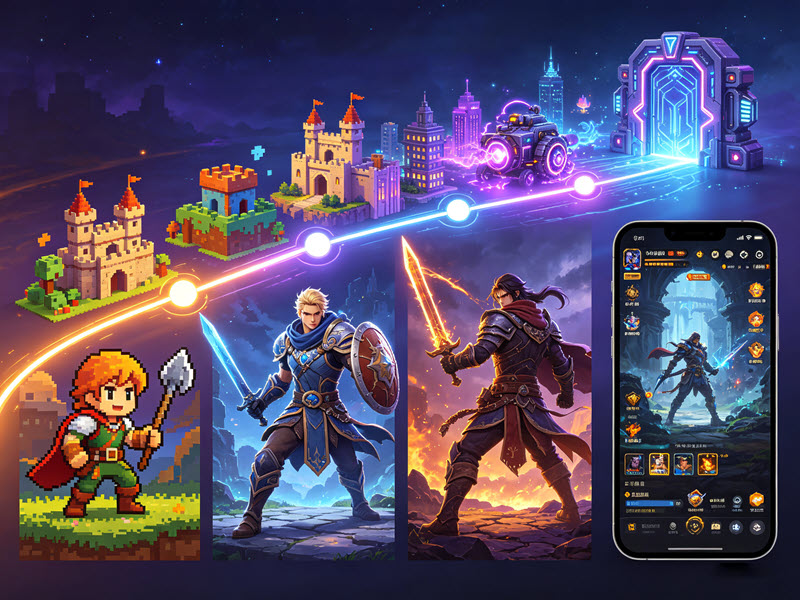
To see how RPGs have evolved, look no further than the Final Fantasy series—a staple of the genre for decades.
The original Final Fantasy VII (1997) was a groundbreaking title. It was the first in the series to embrace 3D graphics while retaining the traditional turn-based combat and linear story structure that defined JRPGs at the time. It became a cultural phenomenon, introducing millions of players to the genre.
Over two decades later, Final Fantasy VII Remake (2020) arrived, honoring the original’s spirit, characters, and materia systems while reimagining combat as a seamless hybrid action/turn-based system. This update reflected modern gaming trends, proving that RPGs can evolve without losing their core identity. Both games serve as perfect time capsules for the state of RPGs during their respective eras.
Mobile RPGs like Raid: Shadow Legends also showcase the genre’s adaptability. These games break gameplay into bite-sized chunks, perfect for smartphones, while still retaining core RPG ideals: compelling progression, stat management, and gear optimization. This shift demonstrates how the genre has successfully expanded to meet the needs of modern players, regardless of the platform they choose.
FAQs About RPG Games
-
What is an RPG?
-
What was the first RPG ever made?
-
Are RPGs the future of gaming?
An RPG (Role-Playing Game) is a story-based, character-driven experience that emphasizes world-building, statistical growth, and player choice. Within these core principles, there are near-infinite opportunities for experimentation. RPGs are some of the most beloved games in history, and their mechanics continue to influence the broader gaming industry.
Due to genre shifts and a long, rich history, there is no definitive answer to the very first RPG ever created. However, 1975’s dnd and Dungeon are often cited as some of the earliest electronic RPGs. They were unauthorized digital adaptations of Dungeons & Dragons designed for early mainframe desktop systems, laying the groundwork for the future of electronic role-playing.
RPG mechanics aren’t just popular today-they serve a critical purpose for game developers. Modern AAA games are bigger than ever, featuring vast open worlds and stunning graphics. Keeping players engaged for dozens (or even hundreds) of hours is a massive challenge, and developers frequently turn to RPG systems-like leveling, loot treadmills, and choice-based storytelling-to solve this problem.
Today, it is rare to find a long-form game that doesn’t include at least some RPG integration. While this doesn’t make every game an RPG outright, it is a clear sign of the genre’s power. Whether you are a fan of epic JRPG storylines, open-world WRPG adventures, fast-paced ARPGs, or collaborative TRPGs, there is an RPG out there for everyone. This genre’s ability to blend immersive storytelling, character growth, and player freedom is what makes it timeless.